Showing posts with label native annuals. Show all posts

Tuesday, April 04, 2006


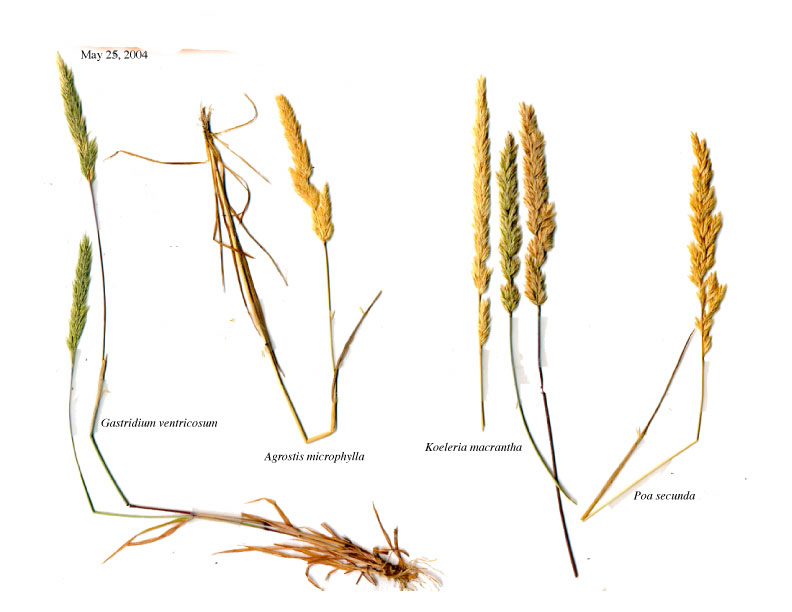
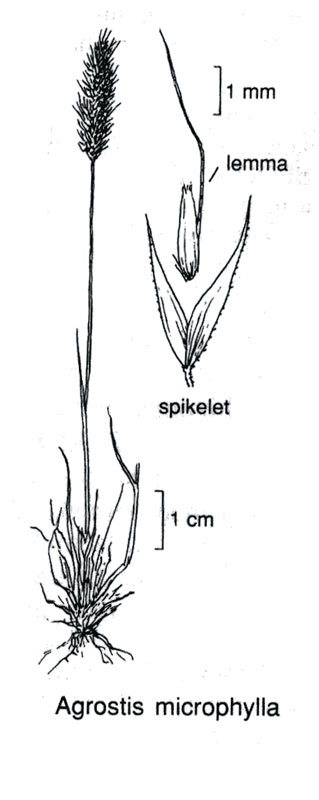
small-leaved bent grass, Agrostis microphylla, May–June, Native

One of four native annuals on our tour, occasional in serpentine, along the coast, and wet places where water has stood in spring. Walk out Trail 9 to the serpentine/chert contact where it grows with meadow barley, as well Road F just north of its intersection with Trail 9, on areas of especially thin serpentine soil, with other native annuals Vulpia microstachys and Deschampsia danthonioides. Look for the short grass with a dense, cylindrical flower head of single-flowered spikelets.
Illustration from Jepson Manual.
CalPhotos images of Agrostis microphylla herbarium vouchers by Steve Matson.

Name: Greek for pasture | small-leaved

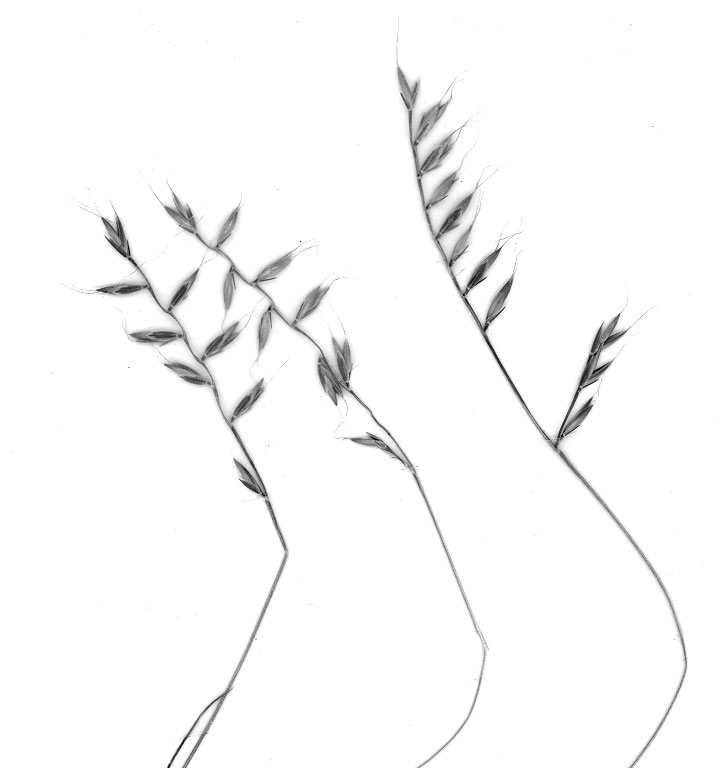
annual hairgrass, Deschampsia danthonioides, May–June, Native

Look for its delicate, open panicle at the Trail 9 serpentine/chert contact, growing with meadow barley, small-leaved bent grass, and common hairyleaf fescue, and on Road F in small barren places north of the Trail 9 intersection with hairy fescue and hairyleaf fescue. It can be abundant on Road F at the well-known docent stop for the diminutive, fragrant Pogogyne serpylloides, where it is universally overlooked.

Name: J. L-Deslongchamps, France | danthonia-like.

Illustration, Manual of the Grasses of the United States, 2 ed. PDF: http://standish.stanford.edu/bin/object?00003911
CalPhotos images of Deschampsia danthonioides.

Friday, March 31, 2006


semaphore grass, Pleuropogon californicus
May-June, Native annual

The more common of the three semaphore grasses in California, it extends inland to the foothills of the Cascades and Sierra Nevada. Growing in a vernal pond near Sand Hill Road, this location is an excellent example how special habitats provide refuge for native plants. California semaphore grass, California oat grass (Danthonia californica), and California meadow barley (Hordeum brachyantherum) grow in and around the pond stratified by tolerance for standing water. All are normally in bloom by early May. Juncus phaeocephalus and Carex subbracteata are also present. California oat grass occupies the outer drier area around the depression and grades rather sharply to annual grassland dominated by Avena barbata and Bromus hordeaceus, though Nassella pulchra is sometimes a conspicuous member of the drier habitat.


Thursday, March 30, 2006


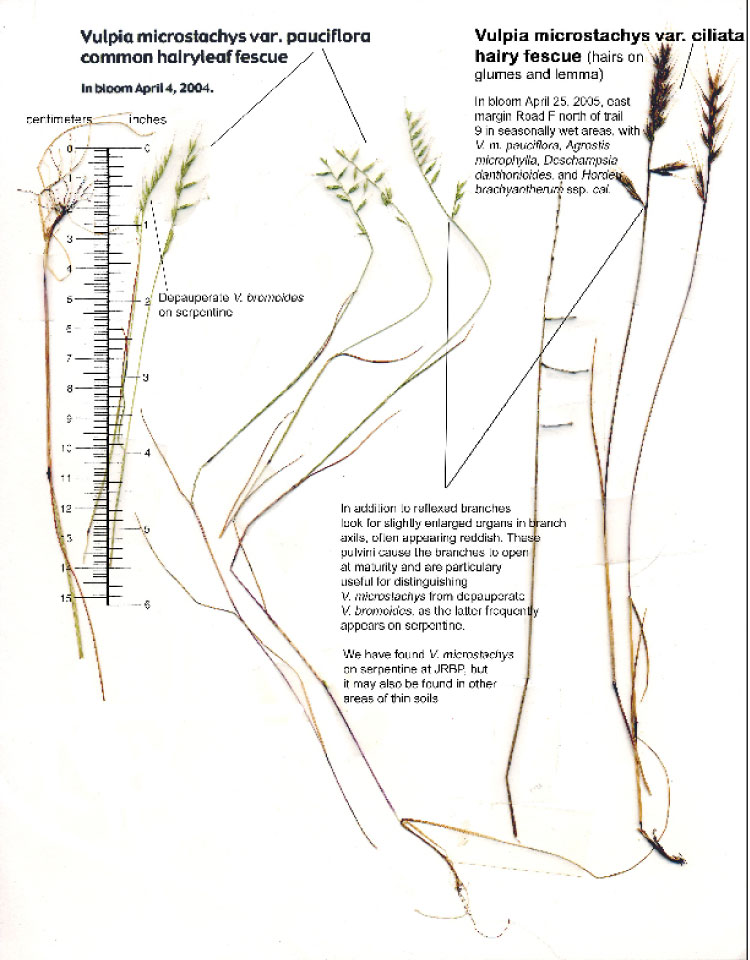
hairyleaf fescue & hairy fescue, Vulpia microstachys var. pauciflora & V. m. var. ciliata, April–May, Native

These annuals can form locally open, airy forests to about 25 cm tall, on serpentine and other thin soils. They have a less-threatening aspect than most of their naturalized relatives, whose inflorescences usually appear congested, lemmas bristling with awns. One of those related taxa, Vulpia myuros var. hirsuta (formerly V. megalura), which also grows on the Preserve, was first recognized only a few decades ago as not native, as it was earlier believed. (R.I. Lonard and F.W. Gould. “The North American Species of Vulpia,” 22 MadroƱo, 1974: 217-230.) As a result, some researchers proposed that annual forbs filled the interstitial spaces of perennial grasslands (as we see today on the Preserve’s serpentine), because there seem few other common native annual grass candidates.

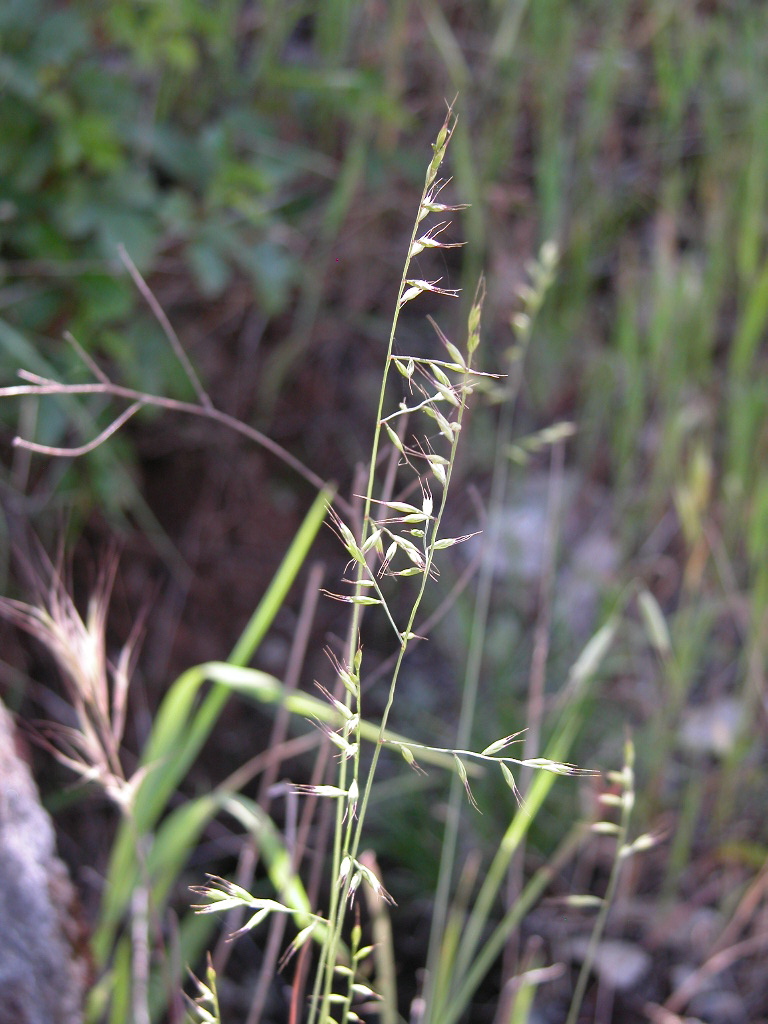
The varieties of V. microtachys have an enlargement in the inflorescence branch axils that cause the branches to reflex in flower. Observing these pulvini, often reddish, requires a hand lens for most people. A more easily observable field character of V. microtachys is the angle formed between the lowest inflorescence branch relative to the upper branches: when viewed from above this feature is striking, the planes formed by the branches are 90+ degrees.

Photo right by Toni Corelli, May 14, 2006. Vulpia microstachys var. pauciflora center and right. Bromus madritensis var. madritensis is lower left in photo.

Name: For J.S. Vulpius, German botanist | small spike-like | few-flowered.